See Our Blogs

Don't Book the Call... If You're the Type

We turned down a founder last month who had €15,000 ready to go. Because the way he talked about the program told us exactly how the project was going to end. There's a version of this that works and a version that doesn't, and the difference has nothing to do with budget. Here are the five types we always say no to — and why recognizing yourself in one of them is actually the most valuable thing we can do for you right now.

Their Logistics Team Couldn't Keep Up When We Took Over

Y Connection had been selling lighting globally since 2010. Forty people, fourteen years, a product they knew better than anyone. When they launched Nordic Lamps for the consumer market, they had everything — except someone who knew how to put it in front of a stranger and make them buy. What happened next moved faster than their warehouse could handle.

From €15K to More Than €260K Monthly in Less Than a Year
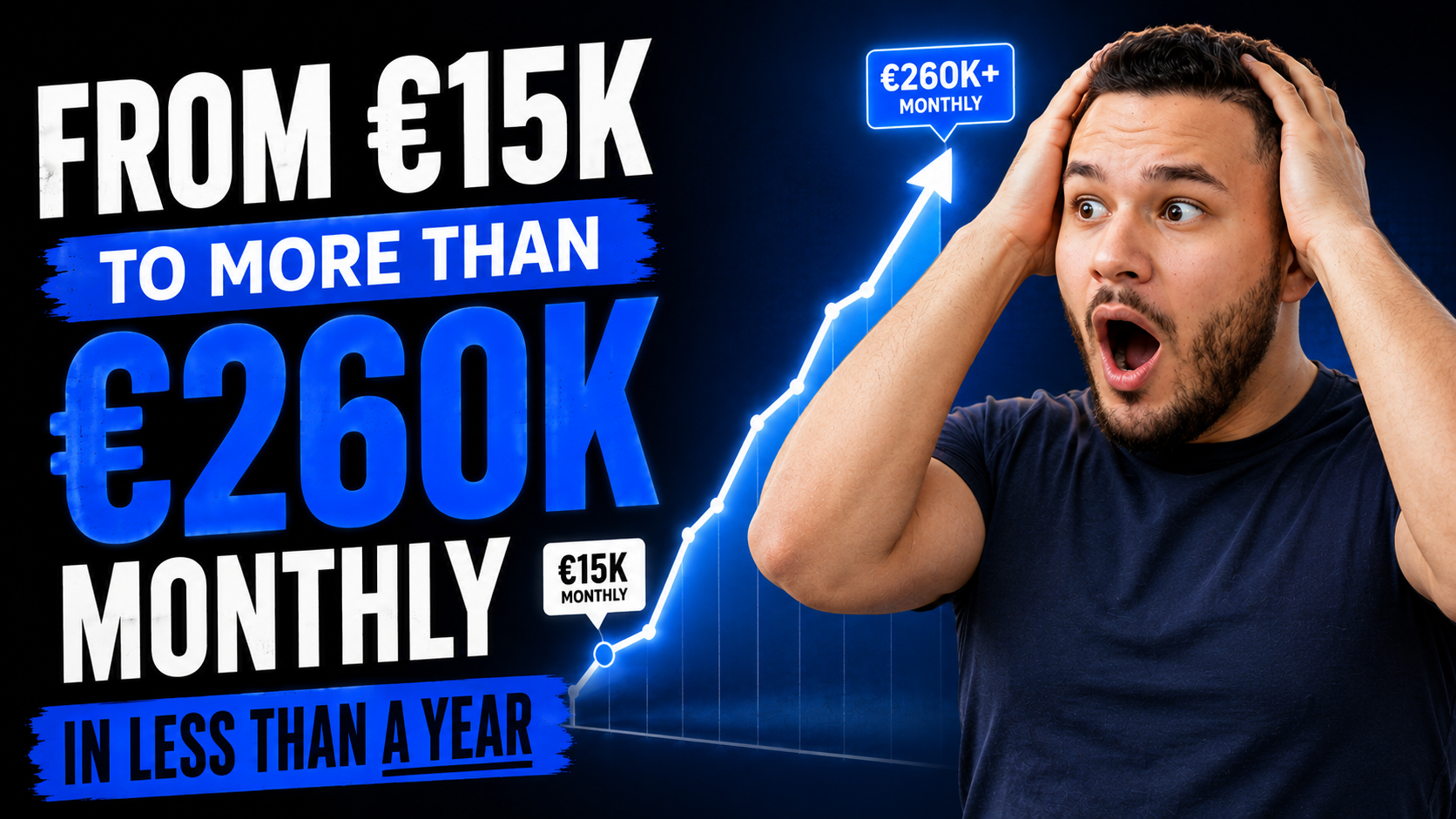
Jonas was a solo entrepreneur and already doing €18,000 a month. But that was the problem. The business had outgrown him before he even knew it had a ceiling. What happened in the next twelve months is what scaling actually looks like when the infrastructure finally catches up to the ambition.

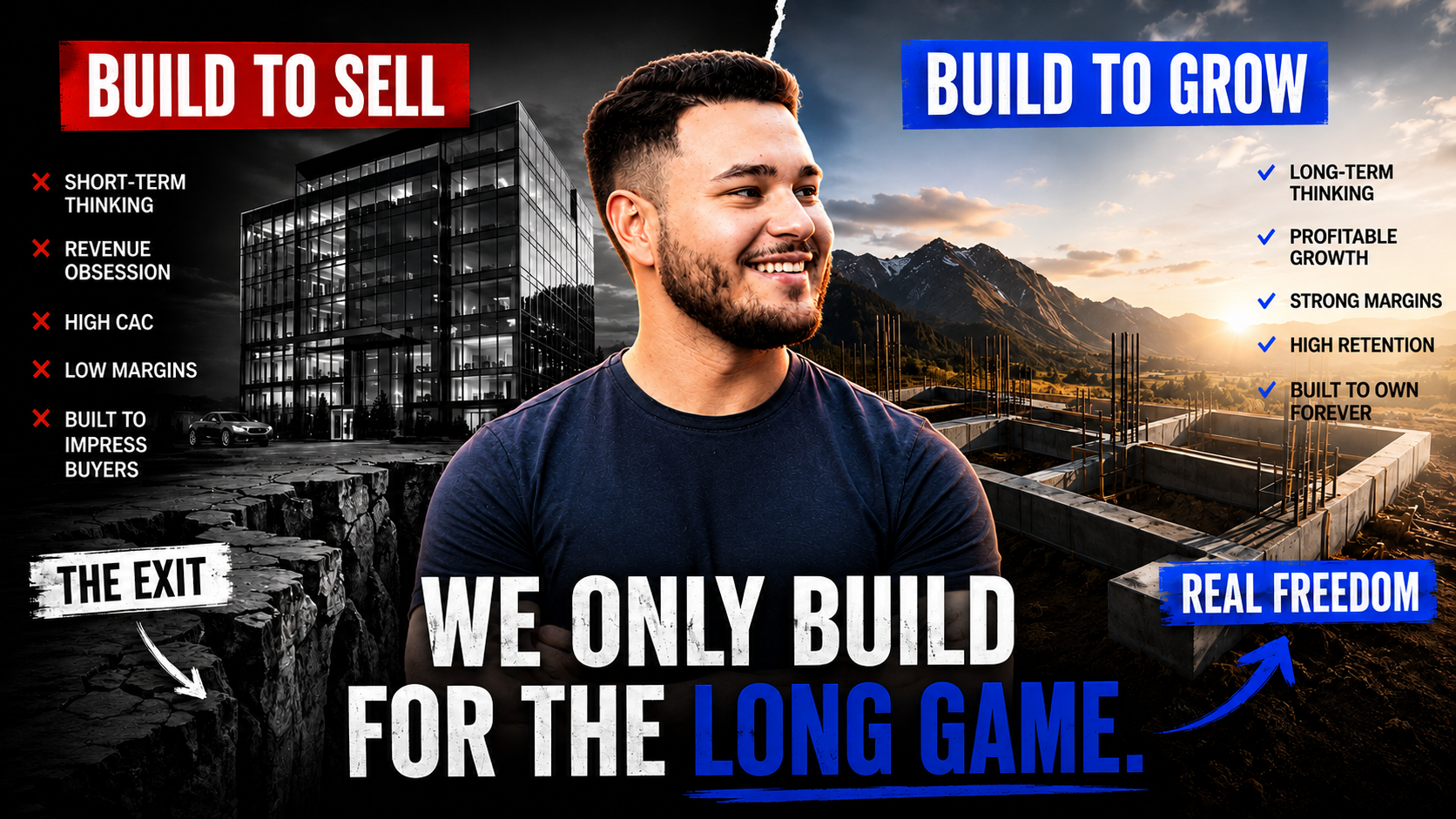
We only build for the long game.

Most e-commerce founders are building the wrong business. One optimized for how it looks, not how it lasts. We don't take those clients. Here's why the long game is the only game worth playing.

The Business Is Growing. You Should Be Worried.

A 4x ROAS that's quietly acquiring customers who never come back. A hero product accounting for 70% of revenue with no one asking what happens if it stops. A discount that spiked October's conversion rate and trained an entire audience to wait for the next one. Seven things that are actively working against most ecommerce businesses right now — inside numbers that still look fine from a distance.

"The Business Grew the Day We Stopped Looking at Ads"
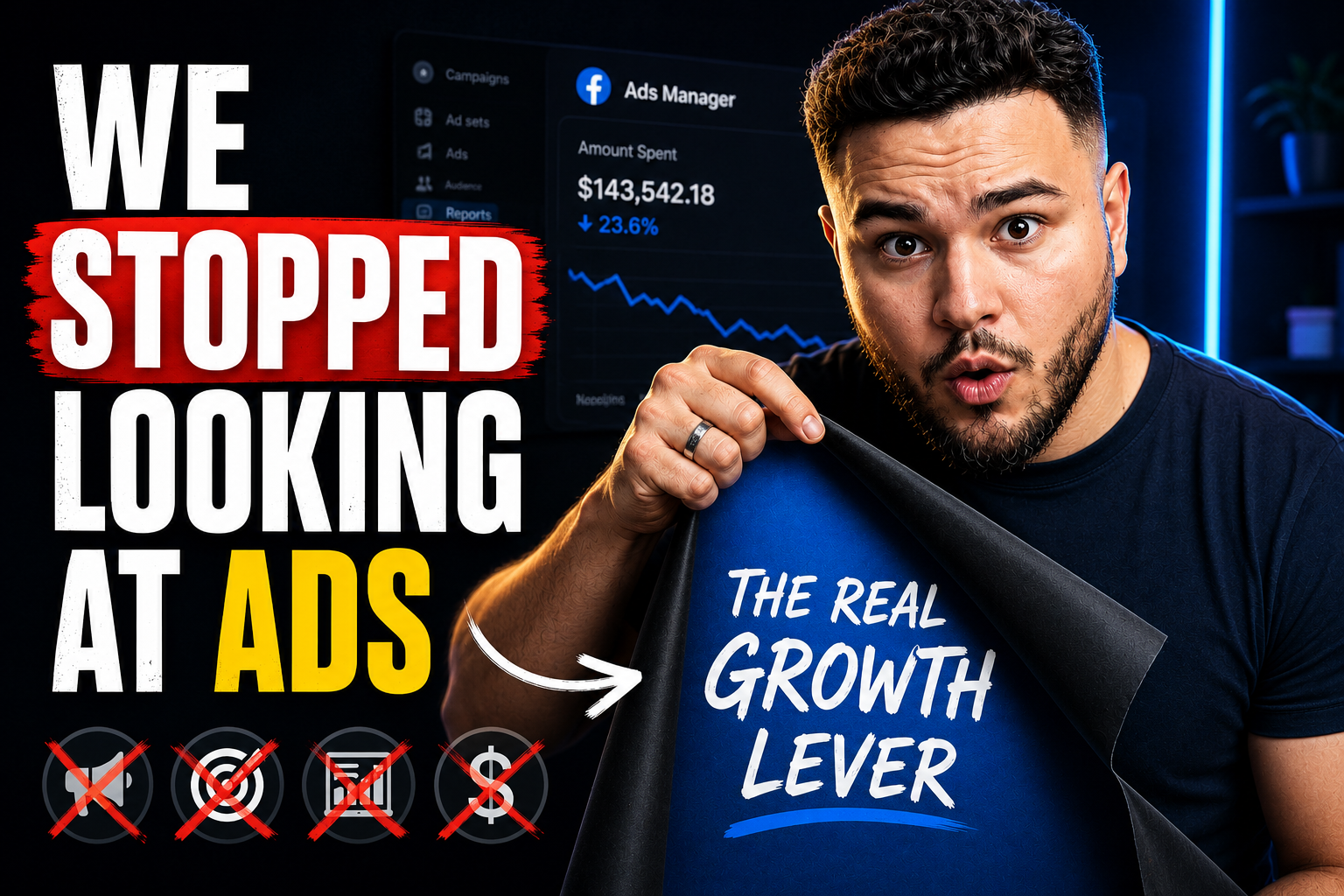
Same creative, same budget, same campaigns. What changed was the checkout — one field cut from the payment step, the shipping cost surfaced earlier, a trust element moved to exactly where the hesitation was happening. Revenue shifted before a single new creative went live. Which raised an uncomfortable question: if the store was losing a third of its carts before, what had all that ad spend actually been doing? Sending the right people, as it turned out, to a store that was quietly sending them away.

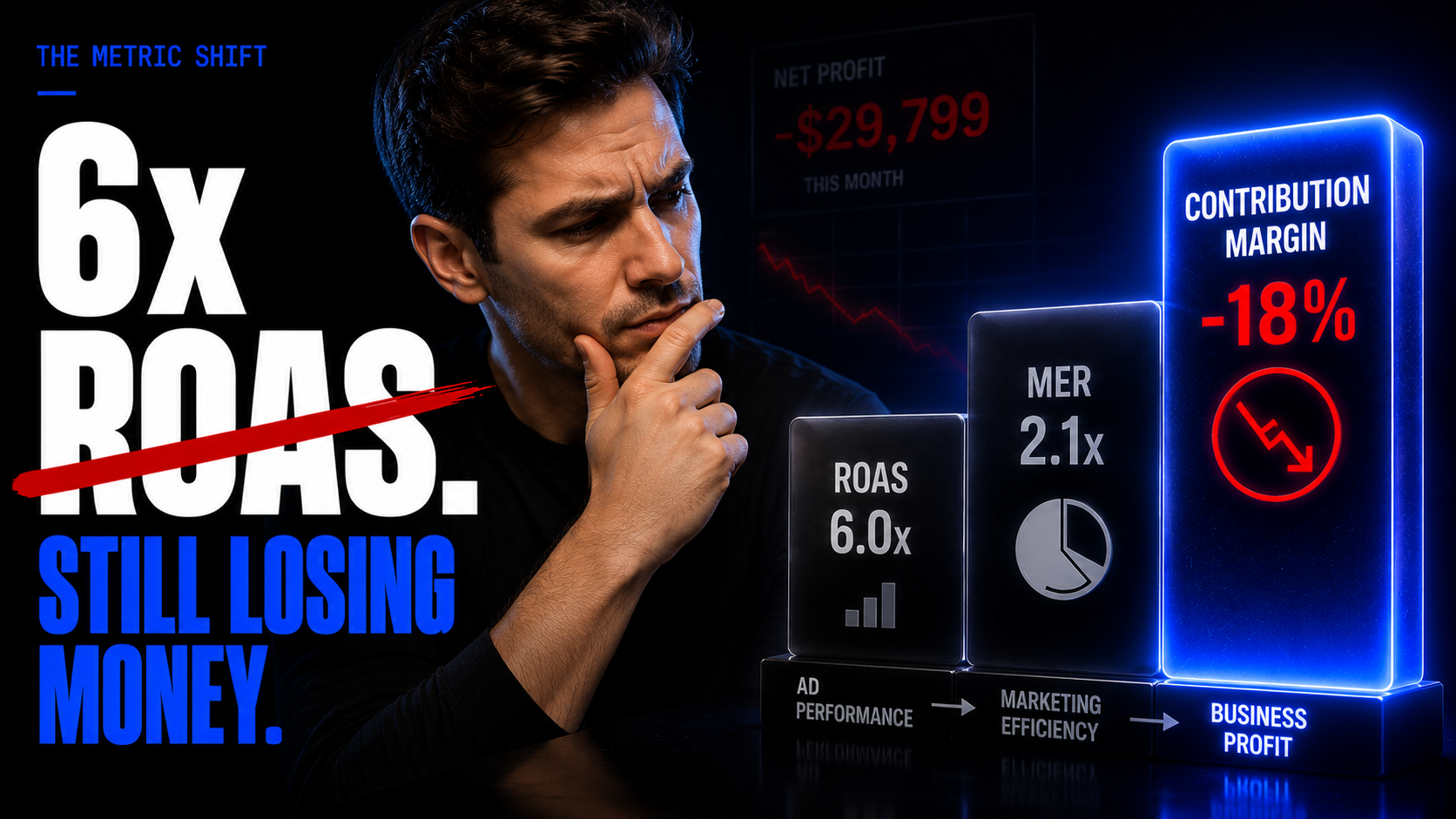
Your 6x ROAS is a Facade

Meta says 6x. Google says 5x. Add it all up and you should be printing money — so why does your P&L say you barely broke even? For a decade, ecommerce lived and died by ROAS. But a 6x can still lose money, and the sharpest operators have quietly stopped trusting it. Here's why they moved from ROAS to MER to contribution margin — and why that progression is the difference between optimizing ads and actually running a profitable business.

What 'done-for-you' actually means in e-commerce

You've got €5K–€10K sitting in an account, waiting to become a real business — but nobody can handle product research, store-building, creative, and ads all at once. Most "done-for-you" offers know that, and quietly leave you to figure out the rest. This one doesn't: if the product doesn't sell within 2–3 months, the whole thing gets rebuilt from scratch, at no extra cost. Here's what "done-for-you" actually means when an agency has real skin in the game.

The Number That Decides Whether You Can Scale NOW (Yet Most Brands Ignore)
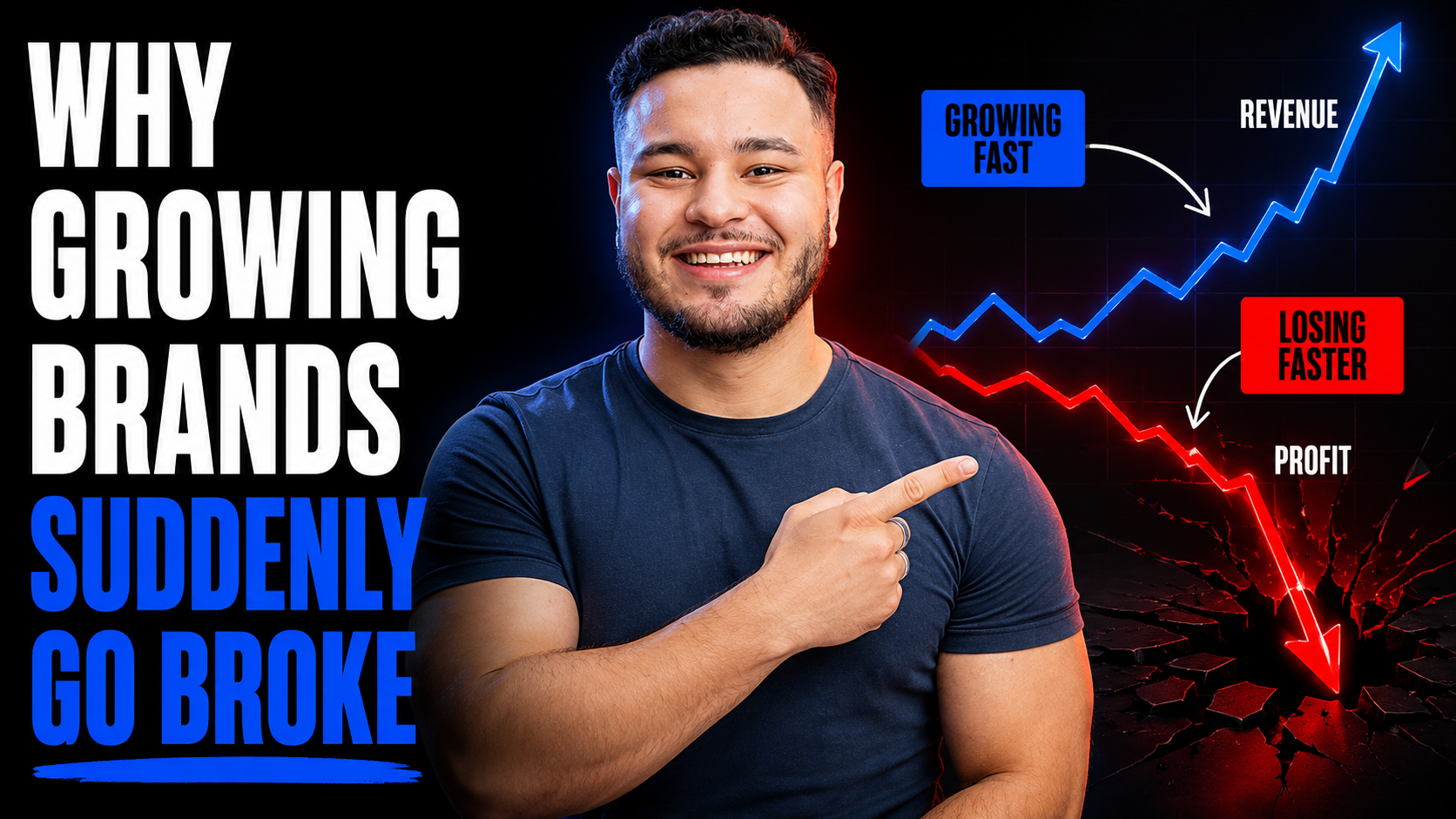
The most dangerous number in your ad account is not low ROAS. It is the CAC ceiling you never calculated. Two brands can sell the same product at the same price and still have completely different limits on what they can spend to acquire a customer. Why? Margins. Repeat purchases. Payback period. Retention. LTV. This article breaks down why scaling without that number turns paid media into a cash-flow problem disguised as growth.

Most agencies send reports. We invite clients into the control room.

Loom videos, explainers, long chats, live dashboards, and a message at 11pm when something just moved. Anything you need to understand the numbers and the decisions we made. Our clients don't wait for a Friday summary. Everything is in the channel where the decisions are actually happening. Every client is in the control room with us, and their opinions (and questions) carry a lot of weight as we implement our systems.

Interested in working with us?

Book a strategy call and we’ll show you where performance is leaking, where scale is still possible, and whether we see a clear path to help you grow.

Frequently Asked Questions

Quick answers to what most founders ask before getting started.
What kind of brands do you work with?

We work with e-commerce brands that have traction and want to break through the next ceiling. Typically: founder-led businesses doing €20K+ per month in ad spend, with strong unit economics and a real product behind them. Most come to us frustrated. They've outgrown their last agency, or they've been running ads in-house and hit a plateau they can't break through alone. If that sounds familiar, we're probably built for you.

What makes Advera different from other agencies?

If you've worked with agencies before, you know the pattern: glossy pitch, retainer signed, then quietly handed off to a junior while results stall. We built Advera around the opposite. We work primarily on results-based compensation, and the senior team you meet on the call is the team running your account. We don't get paid when our work doesn't perform. Skin in the game. That alone reshapes how we operate.

Do you only handle ads?

Primarily, yes. Meta and Google Ads are the core. We also build the supporting systems that make those ads perform harder: creative testing frameworks, landing page and funnel optimization, and the measurement infrastructure that ties every ad spend to revenue. We focus only on these levers because we don't want to dilute the depth that makes us good at the work we actually do.

How quickly can we expect results?

It depends on the state of your account when we take over. Most clients see meaningful shifts within the first 60-90 days, once we've rebuilt the foundation. But the compounding gains, the kind that scale a brand from seven to eight figures, take six months and beyond. We're built for the long game. If you've worked with agencies that promised quick wins and then watched performance collapse in month four, you already know why that matters.

Do you guarantee results?

No. And any agency that does is either lying or about to be. Too many variables sit outside our control. What we offer instead is the next-best thing: pay tied to performance. If our work doesn't move the numbers, we don't get paid. That's the closest you'll get to a guarantee in this industry, and the only one worth trusting.